Custom Printed PLA Compostable Cups — Plant-Based Eco Branding, 250 MOQ
PLA is the only cold cup material that is ASTM D6400 certified compostable and crystal-clear. Derived from corn and sugarcane, it breaks down in commercial composting facilities — turning your branded cup into a green marketing story as well as a brand touchpoint. 9–24oz, from $0.32/unit.
About PLA Cups
The Only Compostable Clear Cup — A Brand Story in Every Sip
PLA (polylactic acid) is fundamentally different from every other cup material on this page. Where PET, PP, and PS are petroleum-derived plastics, PLA is a bioplastic derived from fermented plant sugars — most commonly corn starch in North America and sugarcane where corn isn't economical. The sugars are fermented to produce lactic acid, which is then polymerized into a resin with optical clarity comparable to PET and certified compostability that no petroleum plastic can match.
The defining certification for PLA cups is ASTM D6400 — the US industrial standard for compostable plastics. Cups meeting this standard will biodegrade in a commercial composting facility within 180 days, leaving no toxic residue. This is not a vague "biodegradable" claim — it is a third-party certified performance standard. The BPI (Biodegradable Products Institute) logo on ASTM D6400 certified PLA products is the clearest proof of this commitment in the marketplace.
One nuance matters: ASTM D6400 refers to commercial composting, not home composting. Commercial facilities reach temperatures above 140°F and maintain active microbial populations that accelerate PLA breakdown. In a home compost pile or landfill, PLA degrades significantly more slowly. This means the eco claim on PLA cups is real and substantiated — but requires composting infrastructure to deliver on. Brands using PLA should pair the cup with customer education and access to composting collection.
From a branding perspective, PLA cups offer the full visual toolkit of clear plastic — the same crystal clarity as PET, the same ability to print vivid logos with or without white underbase, the same compatibility with dome lids and straw lids. The difference is in the story: for brands whose customers value sustainability, a PLA cup is a conversation, a brand differentiator, and a tangible commitment — not just a cup.
🌱 End-of-Life Guidance for Branded PLA Cups
PLA cups should be composted — not recycled. PLA mixed into PET or PP recycling streams contaminates the recycled material. Always direct customers to composting collection. Printed PLA cups maintain their ASTM D6400 compostability certification — the exterior screen print does not affect compostability.
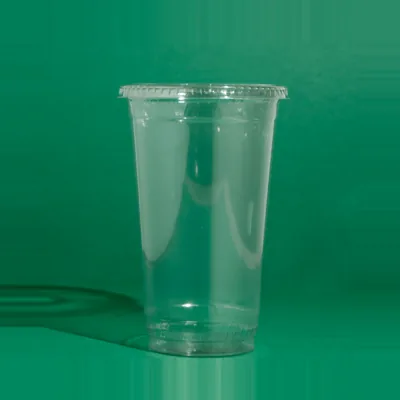
Polylactic Acid (PLA)
The Eco-Committed Brand's Clear Cup
ASTM D6400 certified compostable. Plant-based. Crystal-clear. PLA turns your branded cup into a green brand statement — without sacrificing the visual clarity that makes cold drinks look great.
ASTM D6400 Certified Compostable
Third-party certified to biodegrade in commercial composting facilities within 180 days. A substantiated sustainability claim — not a vague "eco-friendly" marketing term.
Derived from Corn & Sugarcane
PLA resin is made from plant sugars, not petroleum. The renewable feedstock reduces reliance on fossil fuels throughout the cup's lifecycle — from material sourcing to end-of-life composting.
Crystal-Clear Optical Clarity
PLA achieves optical clarity comparable to PET. Branded logos are vivid, drink colors show through the clear walls, and the overall visual experience is premium — same as clear plastic, better story.
A Marketing Story on Every Cup
PLA cups invite a customer conversation that petroleum cups cannot. The ASTM certification, the plant-based origin, and the composting pathway give eco-committed brands a genuine story to tell.
Material Analysis
Why Eco-Committed Brands Choose PLA
Technical Specifications
PLA Cup Specifications
| Property | Detail |
|---|---|
| Material | Polylactic Acid (PLA) — plant-based bioplastic |
| Raw Material Source | Corn starch (North America) / sugarcane — annually renewable |
| Available Sizes | 9 oz · 12 oz · 16 oz · 24 oz |
| Appearance | Crystal-clear (comparable optical clarity to PET) |
| Compostability Certification | ASTM D6400 — commercial composting within 180 days |
| Surface Treatment | Corona-treated before printing |
| Print Colors | 1–3 spot colors per design |
| Pantone Matching | Available on orders of 500+ units |
| MOQ | 250 units per design |
| Standard Lead Time | 7 business days after proof approval |
| Temperature Rating | Cold only — do not exceed 110°F (heat deflection ~110°F) |
| BPA Status | BPA-free (plant-based chemistry) |
| FDA Status | FDA food contact compliant for cold beverages |
| End-of-Life | Commercial composting — NOT standard plastic recycling |
| Storage | Cool, dry conditions below 80°F; 12–18 month shelf life |
| Prop 65 | Compliant |
Volume Pricing
PLA Cup Pricing by Quantity
PLA costs slightly more than PET or PP due to the certified compostable resin. For eco-positioned brands, this premium is offset by the marketing value of the ASTM certification and plant-based story.
| Quantity | 1 Color | 2 Colors | 3 Colors | |||
|---|---|---|---|---|---|---|
| Per unit | Total | Per unit | Total | Per unit | Total | |
| 250 units | $0.95 | $238 | $1.14 | $285 | $1.38 | $345 |
| 500 units | $0.76 | $380 | $0.91 | $455 | $1.10 | $550 |
| Most Popular 1,000 units | $0.60 | $600 | $0.72 | $720 | $0.87 | $870 |
| 2,500 units | $0.47 | $1,175 | $0.56 | $1,400 | $0.68 | $1,700 |
| 5,000+ units | $0.32 | $1,600+ | $0.38 | $1,900+ | $0.48 | $2,400+ |
Common Applications
Who Uses Custom Printed PLA Cups?
Production Process
How We Screen Print PLA Compostable Cups
Artwork Review & Underbase Decision
We review your artwork and advise on the underbase approach: with white underbase for opaque vivid colors, or transparent-ink effect for a translucent look on the clear PLA surface. A digital proof is prepared for your written approval.
Corona Surface Treatment
PLA has different surface chemistry than PET — standard PET inks may not adhere well without surface preparation. We corona-treat PLA cups and use PLA-specific ink formulations to ensure proper adhesion throughout the cup's service life.
White Underbase Application (If Selected)
For opaque vivid printing, a white ink base layer is applied and UV-cured before colored inks. This creates an opaque foundation that makes colors consistent and vivid regardless of drink color or lighting conditions.
Multi-Pass Color Screen Printing
Each Pantone spot color is applied in a separate machine pass with rotary registration for color alignment accuracy. Up to 3 spot colors per design. Colors are UV-cured between passes to maintain clean borders.
Final UV Cure at Controlled Temperature
PLA requires careful temperature management during the UV cure — excessive heat can distort the cup. Our process uses a calibrated low-temperature UV cure that sets the ink without stressing the PLA structure.
Quality Inspection & Temperature-Controlled Packing
Print quality, color accuracy, and cup integrity are verified before packing. PLA cups are packed in cool conditions and shipped promptly — prolonged exposure to high temperatures during shipping can be avoided with proper carton design and timing.
Safety & Compliance
PLA Cup Safety & Certification Details
Material Comparison
PLA vs. Other Cup Materials
| Material | Clarity | Compostable | Hot Drinks | Eco Story | Cost | Best For |
|---|---|---|---|---|---|---|
| PLA (this page) | ⭐⭐⭐⭐ Crystal-clear | ✓ ASTM D6400 | ✗ 110°F max | 🌱 Plant-based + compostable | $$$ | Eco brands, zero-waste events, green operations |
| PET Clear | ⭐⭐⭐⭐⭐ Glass-like | ✗ | ✗ Cold only | ♻ Recyclable #1 | $$ | Premium visual branding, juice, cocktails, boba |
| PP Plastic | ⭐⭐ Semi-translucent | ✗ | ✗ 140°F max | ♻ Recyclable #5 | $ | Smoothies, boba, gyms, high-volume cold drinks |
| PS Rigid | ⭐⭐⭐ Clear/opaque | ✗ | ✓ 175°F | ⚠ Limited recycling | $$ | Hot+cold, finest logo detail, stadiums |
| Paper | ⭐ Opaque | ~ PLA-lined options | ✓ 200°F | 🌱 FSC+PLA options | $$ | Coffee, hot+cold, eco brands |
| Foam | ⭐ Opaque | ✗ | ✓ 200°F | ⚠ Banned in some states | $ | Lowest cost, best insulation, institutional |
FAQ
PLA Compostable Cup Questions — Answered
What does ASTM D6400 certified compostable mean?
ASTM D6400 is the US standard for compostable plastics. It certifies that PLA cups will break down in a commercial composting facility within 180 days, leaving no toxic residue and meeting heavy metal limits. Certification is issued by third-party certifiers like BPI. It does not mean home-compostable — commercial composting temperatures and microbial activity are required.
Can PLA cups be composted at home?
Generally no. PLA requires the elevated temperatures (140°F+) and active microbial environment of a commercial composting facility to break down within the certification timeframe. In a home compost pile, PLA degrades much more slowly — potentially years rather than months. Always direct customers to local commercial composting programs, not backyard composting.
What is PLA made from?
PLA (polylactic acid) is derived from fermented plant sugars — most commonly corn starch in North America and sugarcane in other regions. The sugars are fermented to produce lactic acid, then polymerized into PLA resin. The result is a bioplastic with optical clarity similar to PET and certified compostability that petroleum-based plastics cannot achieve.
Can PLA cups hold hot beverages?
No. PLA has a heat deflection temperature around 110°F — significantly lower than other cup materials. Filling a PLA cup with hot coffee or tea causes rapid softening and potential deformation. PLA cups are strictly for cold beverages. For hot drinks, see our paper cups (200°F) or PS cups (175°F).
Are PLA cups recyclable?
No — and this is important. PLA cannot be recycled in standard plastic recycling streams. PLA mixed into PET or PP recycling batches contaminates the recycled material and downgrades the quality. PLA's correct end-of-life pathway is commercial composting. Always direct customers to composting — not recycling bins.
How clear are PLA cups compared to PET?
PLA has excellent optical clarity — very comparable to PET, and far clearer than PP. The difference is subtle: PLA can have a very slight haze compared to PET's glass-like perfection, but it is not perceptible in most service conditions. For all practical purposes, PLA is a crystal-clear cup with a compostability story that PET cannot match.
Do I need a white underbase for PLA cup printing?
Same decision as PET. Without a white underbase, colors appear translucent and shift with the drink color inside — which can look great for minimalist logos. With a white underbase, colors are fully opaque and vivid regardless of drink. We recommend specifying your preference when submitting artwork. A free proof shows both options before production.
What is the shelf life of PLA cups before use?
PLA cups stored properly (cool, dry, below 80°F) are stable for 12–18 months. Do not store near heat sources or in hot, unventilated storage environments — PLA can soften in very high storage temperatures. Plan order volumes you can use within the shelf life.
Is PLA better than PET for eco branding?
It depends on end-of-life infrastructure. PLA is better when your customers have access to commercial composting — the cup genuinely breaks down in a certified facility. PET is better when composting infrastructure isn't available, because PET is recyclable #1 with the widest curbside acceptance in the USA. PLA in a landfill degrades slowly — the eco benefit is only realized when the cup is composted.
Can I use PLA cups at zero-waste events?
Yes — PLA cups are the standard choice at certified zero-waste events with composting onsite. Confirm that your event's composting vendor accepts printed PLA cups (most do). Printed PLA cups maintain their ASTM D6400 compostability certification — the exterior screen print does not affect compostability.
Can I print "compostable" on the PLA cup itself?
Yes — and we recommend it. Printed messaging like "Compostable — please compost!" directly on the cup dramatically improves correct disposal rates. Customers who don't know to compost will default to trash or recycling. On-cup messaging bridges that knowledge gap. We can incorporate this language into the artwork at no extra charge.
What is the minimum order for PLA cups?
MOQ is 250 units per design. Volume pricing steps down at 500, 1,000, 2,500, and 5,000+ units.
What is the lead time for custom PLA cups?
Standard lead time is 7 business days from artwork approval. Rush production (3 business days) is available for a surcharge. Most US destinations receive orders within 1–3 business days after production via ground shipping.
Why does PLA cost more than PP or PET?
PLA certified resin (ASTM D6400) costs more than petroleum-based PET or PP due to the fermentation-based production process and the certification costs embedded in the supply chain. For eco-positioned brands, this cost premium is typically offset by the marketing value of a genuine, verifiable sustainability claim that resonates with environmentally conscious customers.
Can I print on PLA with the same inks used on PET?
PLA and PET have different surface chemistry. Inks formulated for PET may not adhere well to PLA, and vice versa. We use PLA-specific ink formulations and apply corona treatment before printing to ensure proper ink adhesion. This is why choosing a printer with PLA-specific printing experience matters — generic cup printers often use PET inks on PLA, leading to adhesion failures.
Turn Your Cup Into a Brand Story — Brand Your PLA Compostable Cups
250 unit MOQ. 7-day production. ASTM D6400 certified. The cup that proves your eco commitment is more than a claim.